- 58 El Hegaz Street, Heliopolis, Egypt
- +201091818229
- info@after-graphic.com
- Login
- Track Order

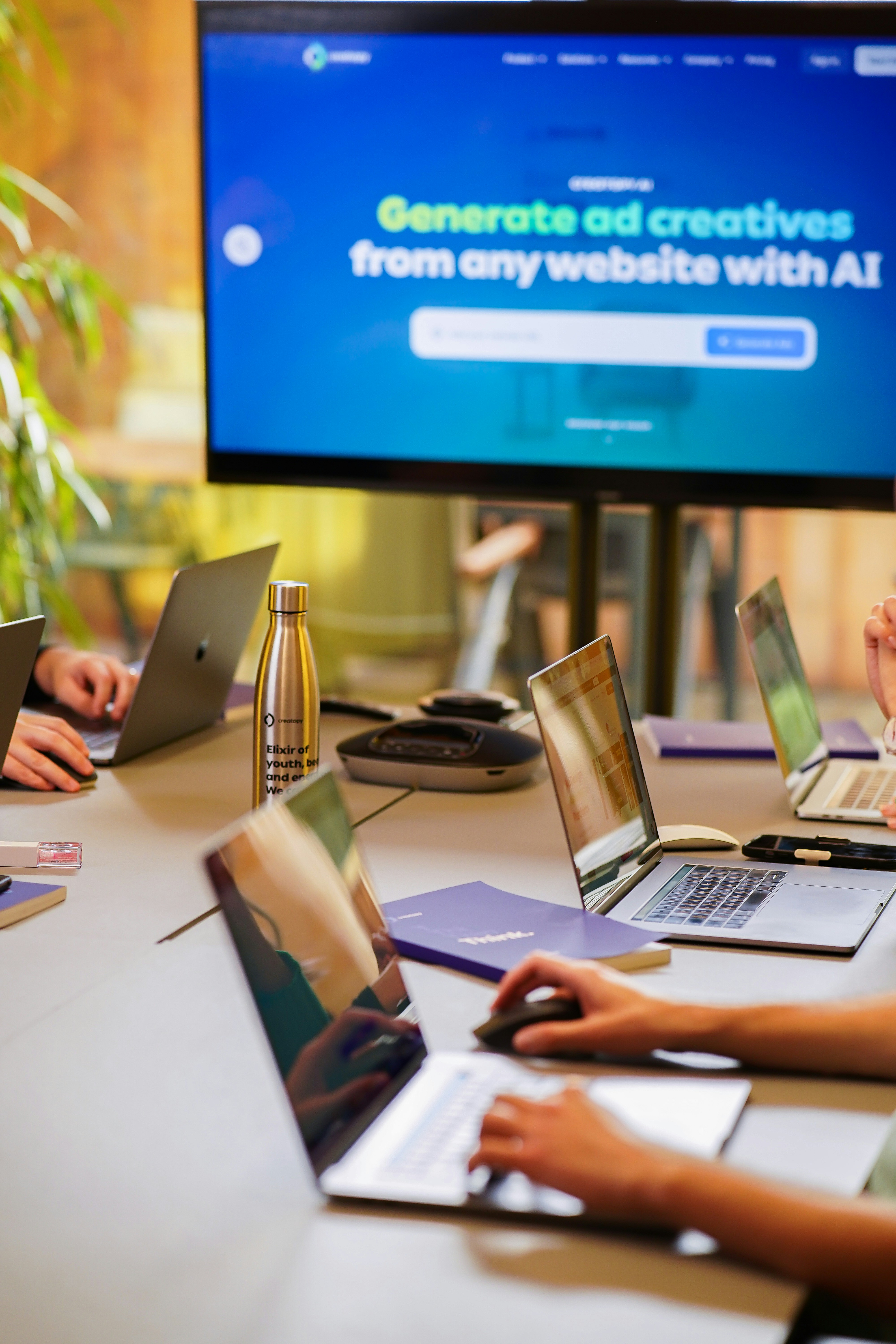
As we navigate through the mid-point of the decade, AI marketing 2026 has become the definitive benchmark for brand survival. The landscape of digital marketing is no longer just evolving; it is undergoing a total structural overhaul. At After Graphic Studio, we have observed that integrating artificial intelligence into marketing strategies is no longer an optional luxury for tech giants—it is an absolute necessity for any brand aiming to maintain a pulse in this hyper-competitive global and regional market.
This massive shift is primarily fueled by two powerful engines: advanced marketing automation and the non-negotiable demand for hyper-personalization. Today’s consumers are more sophisticated than ever before. They do not just want generic products; they demand seamless digital experiences that feel curated specifically for their unique needs and pain points.
As an agency with 20 years of hands-on expertise in the creative and technical fields, we understand that the true “Sana’eya” (master craftsmanship) of modern digital marketing lies in using AI. We do not use it to replace the human touch, but to amplify human intuition and strategic thinking at a scale previously thought impossible. The rise of generative AI has fundamentally changed how we interact with, process, and deploy data across all touchpoints.
We have definitively moved from a reactive era—where we simply analyzed what happened yesterday—to a predictive and generative era, where we create what will happen tomorrow. This transition is the beating heart of digital transformation in 2026, shaping a future where marketing acts more as a personalized, concierge-level service rather than a loud, broadcasted advertisement. In this comprehensive guide, we will explore the core pillars of AI marketing 2026 and how you can leverage them to dominate your industry.
Generative AI is a highly sophisticated subset of artificial intelligence capable of creating entirely new, original content. This includes high-converting ad copy, high-fidelity images, dynamic audio, and even complex interactive web simulations. Unlike the traditional AI that merely sorted or categorized existing data, advanced generative models learn deep contextual patterns to produce unprecedented outputs.
This paradigm shift represents the most significant leap in creative technology since the widespread adoption of the internet. Tools like Google Gemini, Claude, and Midjourney are no longer experimental toys; they are foundational production tools. In the context of AI marketing 2026, generative AI serves as the unstoppable engine behind hyper-efficient content factories.
At After Graphic Studio, we deploy these advanced models to analyze consumer behavior deeply and instantly produce marketing assets that resonate profoundly with specific target audiences. This remarkable capability unlocks a level of marketing execution where every single user can experience a different, tailored version of a landing page or an ad campaign. It is optimized specifically for their aesthetic preferences and psychological buying triggers.
The strategic integration of generative AI is now vital for maintaining a competitive edge in any sector. Whether it is in fashion, software development, or corporate branding, the message is loud and clear: businesses that ignore the generative AI revolution are effectively choosing digital obsolescence. Embracing this tech is the first step in mastering AI marketing 2026.
As we operate in 2026, the generic phrase “Dear Customer” is officially a relic of the distant past. Hyper-personalization has cemented itself as the new frontier of digital commerce. This is the arena where brands connect with their consumers on a granular, deeply individual level. By leveraging AI marketing 2026 tools, brands now architect experiences that adjust dynamically in real-time.
These dynamic adjustments are based on a user’s current browsing behavior, geographic location, past purchase history, and even highly specific micro-moments. This strategy goes infinitely beyond traditional, clunky market segmentation. We are talking about utilizing continuous data streams to deliver the exact right content, at the exact right moment, on the exact right device.
Through the deployment of sophisticated machine learning algorithms, marketing teams can analyze vast and complex datasets. This includes parsing social media sentiment, tracking cursor velocity on a WooCommerce checkout page, and evaluating historical loyalty. These data points build “Living Profiles” that allow us to predict future buying behaviors with startling, almost clairvoyant accuracy.
Furthermore, true hyper-personalization builds profound emotional loyalty. When a consumer genuinely feels that a brand understands their specific needs, the relationship transforms instantly from a cold transaction to a warm, trusted relationship. This is where advanced marketing automation truly shines, delivering these personalized nudges without any manual human intervention, thus skyrocketing conversion rates.
Relentless efficiency is the foundational cornerstone of any successful AI marketing 2026 campaign. AI-driven automation has completely redefined how creative agencies and in-house marketing departments operate daily. It is no longer just about executing tasks faster; it is fundamentally about executing tasks much smarter and with zero friction.
These powerful platforms provide real-time, actionable insights that empower marketers to pivot their multi-channel strategies in mere seconds, rather than waiting weeks for a post-campaign report. One of the most massive advantages of utilizing AI in marketing is data processing bandwidth. Human teams, no matter how talented, simply cannot analyze millions of cross-channel data points simultaneously.
Modern automation platforms now handle all the digital “heavy lifting.” This includes predictive lead scoring, dynamic email sequencing, and algorithmic social media distribution. By automating these repetitive processes, we liberate our human creative minds to focus strictly on what matters most: high-level strategic planning, brand architecture, and compelling storytelling.
Leading platforms have transitioned into AI-first ecosystems. They natively utilize deep machine learning to optimize PPC ad spend on the fly, guaranteeing that every single dollar in the marketing budget is actively working toward a tangible conversion. For ambitious businesses, this translates to a significantly improved ROI and the agility to outmaneuver much larger, slower competitors.
With 20 years of intense experience in the creative and development industry, the team at After Graphic Studio has witnessed countless digital trends come and go. However, the AI revolution is fundamentally different. In our operations, we apply what we proudly call the “Sana’eya” (Master Craftsman) approach to artificial intelligence.
This philosophy means we treat AI as our absolute most advanced tool—much like a master sculptor treats a laser-precision chisel. The AI does not do the strategic thinking for us; rather, it empowers us to execute work of a scale and complexity that was previously impossible. We are the strategic pilots, and AI marketing 2026 is the powerful engine we navigate.
Our extensive work on complete digital identity overhauls and technical branding has consistently proven that AI is most devastatingly effective when guided by seasoned human intuition. We do not just blindly “hit generate” and hope for the best. We meticulously engineer prompts, aggressively refine outputs, and rigorously test every variation.
We ensure that every single AI-driven campaign or visual asset aligns perfectly with the authentic soul of the brand we are representing. This delicate, masterful balance between cold technical automation and warm creative direction is exactly what sets a professional, top-tier studio apart in the competitive landscape of 2026.
To truly understand the impact of AI marketing 2026, we must look at high-stakes, high-value industries like real estate. Markets such as the vibrant Egyptian real estate sector (from Ain Sokhna to Moqattam) and the booming Saudi Arabian property developments demand a level of precision that only AI can deliver. Selling a luxury villa or a strategic commercial space requires profound trust and impeccable timing.
In these highly competitive markets, we utilize AI to conduct deep predictive market analysis. AI algorithms can evaluate years of pricing data, infrastructure development plans, and buyer search trends to predict which neighborhoods will surge in value next. This allows us to position our real estate marketing campaigns weeks or months ahead of the general market curve.
Furthermore, generative AI is revolutionizing property showcasing. Instead of static 3D renders, we can generate dynamic, AI-driven virtual tours that adapt to the viewer. If the AI detects the user is a family man based on data points, the virtual tour will highlight the children’s rooms and nearby parks. If the user is a young professional, the tour shifts focus to the home office capabilities and proximity to business hubs.
This is the ultimate execution of hyper-personalization. By integrating these AI visual tools with robust CRM systems via automated workflows, real estate brokers can follow up with highly qualified, emotionally engaged leads. This dramatically shortens the sales cycle and maximizes the return on advertising spend in a way traditional marketing never could.
The theoretical concepts of AI marketing 2026 are useless without a rock-solid technical foundation to execute them. For many modern businesses, this digital foundation is built upon WordPress and WooCommerce. However, the true magic happens when we connect these traditional CMS platforms to advanced AI capabilities using powerful automation tools like n8n.
At After Graphic Studio, we engineer complex workflows that turn a standard WordPress website into a self-optimizing sales machine. For instance, using webhooks and APIs, we can connect a WooCommerce store to an AI model like Claude or OpenAI. When a user abandons a cart, the AI instantly analyzes their past behavior and generates a hyper-personalized recovery email with a custom discount tailored exactly to their buying threshold.
Technical SEO is another area where this stack excels. Using tools like Rank Math Pro integrated with AI content analysis, we can programmatically ensure that every product description, blog post, and meta tag is perfectly optimized for search intent. The AI continuously monitors keyword rankings and suggests on-page tweaks to maintain dominance in SERPs.
We also utilize AI to manage server loads and monitor website performance, ensuring that dynamic content generation does not slow down page speed. By combining Elementor’s visual flexibility, WooCommerce’s commerce engine, and n8n’s logic flows, we create a marketing infrastructure that is robust, scalable, and heavily fortified for the future.
With the immense power of AI marketing 2026 comes equally immense responsibility. The rapid rise of these technologies brings significant ethical hurdles that cannot be ignored. Data privacy remains the most pressing concern globally. As we collect more granular data to fuel hyper-personalization engines, we must be incredibly vigilant about how that sensitive data is acquired, stored, and utilized.
Strict compliance with global frameworks like GDPR, as well as local regional data regulations, is no longer an optional legal afterthought; it is the fundamental foundation of brand trust. Consumers will only share their data if they believe a brand will protect it fiercely and use it to genuinely enhance their experience, not exploit it.
Another critical ethical issue is algorithmic bias. If the historical data used to train AI models is inherently skewed or prejudiced, the resulting marketing outputs will inevitably be biased as well. This can lead to the severe alienation of specific demographics and cause irreversible damage to a brand’s hard-earned reputation in the market.
Transparency is the final, crucial piece of the AI ethical puzzle. In an era dominated by deepfakes and mass-produced AI-generated content, being explicitly honest with your audience about your use of AI is a powerful way to build unwavering loyalty. Modern consumers highly value brands that prioritize ethical digital practices over short-term, automated gains.
While AI marketing 2026 sets the current gold standard, true industry leaders are already looking at what comes next. The immediate future points towards the seamless integration of Augmented Reality (AR) and Virtual Reality (VR) combined with generative AI. We are moving towards spatial computing, where the internet is not just something you look at on a screen, but a space you inhabit.
Imagine a fully immersive “Virtual Showroom” generated in real-time specifically for a user. If a client is looking for office furniture, the AI will instantly render a 3D environment matching their exact corporate branding, populated with products the AI knows fits their budget and ergonomic preferences. This level of immersive hyper-personalization will obliterate current conversion benchmarks.
Another rapidly approaching frontier is Emotional AI. Future marketing systems will be capable of detecting a user’s emotional state through voice tone analysis or subtle cursor movements, adjusting the marketing message accordingly in real-time. If a user exhibits frustration during a checkout process, the AI might instantly simplify the form and offer proactive live support.
Furthermore, we anticipate the rise of autonomous AI marketing agents. These will be sophisticated programs capable of not just executing campaigns, but fully conceptualizing them, allocating budgets, running A/B tests, and scaling winning ads without any human prompting. The role of the marketer will shift entirely from operator to overseer.
In this rapidly evolving, AI-dominated era, the core role of creative agencies like After Graphic Studio is undergoing a profound shift. We are no longer merely “content creators” or “ad buyers.” We have evolved into “Strategic Technical Orchestrators.” Our primary mission is to seamlessly manage the complex, delicate interplay between human creativity, advanced AI automation, and rigorous data analytics.
We actively help ambitious brands navigate the treacherous landscape of digital transformation, ensuring they do not just superficially adopt AI, but integrate it deeply and correctly into their core business logic. An agency’s value in 2026 is measured by its ability to build scalable, automated systems that generate predictable revenue.
Modern agencies must remain hyper-agile. Technology is advancing at such a breakneck pace that a technical strategy developed just six months ago might already be functionally obsolete. Continuous, aggressive learning, rapid experimentation, and a culture of failing fast and iterating are the undeniable hallmarks of a successful agency today.
We pride ourselves on operating right at the bleeding edge of these technological changes. By combining our 20 years of foundational design and development experience with the latest AI marketing 2026 tools, we provide our clients with an unfair advantage in their respective markets. We do not just build websites; we build intelligent digital ecosystems.
The spectacular evolution of digital marketing is undeniably and irreversibly an AI-driven journey. Mastering AI marketing 2026, embracing true hyper-personalization, and deploying robust marketing automation have transitioned from being competitive advantages to being the bare minimum standard for operational excellence.
For modern organizations aiming to not just survive but thrive, the choice is stark and clear: embrace this relentless innovation, or prepare to be swiftly left behind by competitors who do. The tools are available, the strategies are proven, and the market is ready for a more intelligent, personalized approach to commerce.
As we have explored throughout this extensive guide, the future is about much more than just adopting flashy technology. It is fundamentally about how we strategically use that technology to foster deeper, more meaningful human connections at scale. The goal is to make every customer feel like your only customer, utilizing data to serve, not just to sell.
In conclusion, the landscape of AI marketing 2026 is incredibly bright, wildly dynamic, and full of untapped potential. By recognizing the immense transformative power of these AI tools and thoughtfully integrating them into a forward-thinking, ethical agenda, businesses can secure their sustained success in an increasingly complex digital world. It is time to stop reacting to the future and start generating it.